


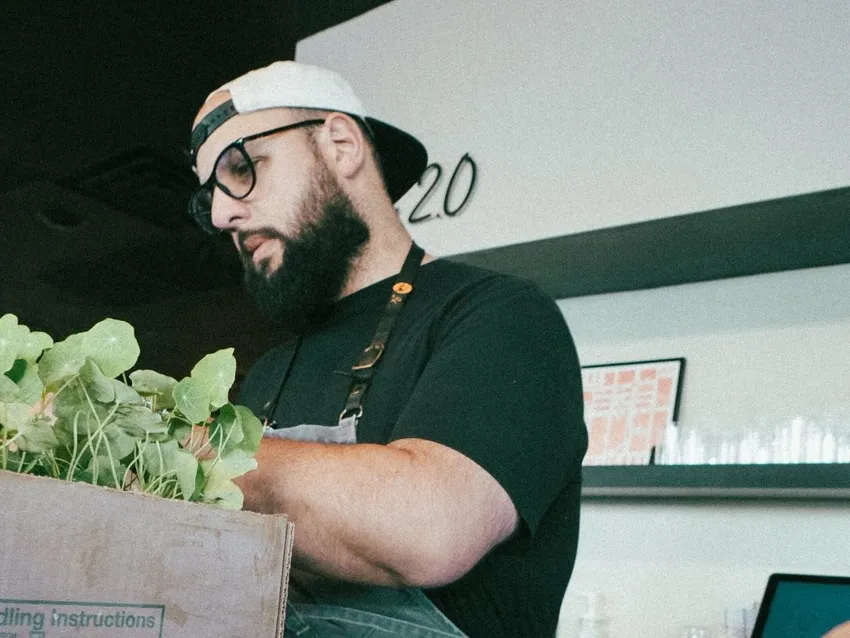

What is the simplest roadmap to being recognized by the Michelin Guide? Chef Pedro Mederos, whose restaurant Kojin 2.0 earned a Michelin recommendation, believes the answer lies in ignoring the awards entirely. In this interview, he breaks down the discipline, mindset, and "back-to-basics" approach required to reach the guide's prestigious standards. We at OysterLink sat down with Chef Pedro Mederos to hear his story.
Could you please introduce yourself and tell us a bit about your career path?
Pedro Mederos: I'm Chef Pedro Maderos. I'm the chef co-owner of Kojun 2.0 in Coral Gables. I started in kitchens about 15 years ago, coming up on 16, and you know some of the first kitchens I was in were very well recognized, highly awarded kitchens, and definitely lied my way into them. You know, with no experience and no way of knowing what I was getting myself into, and then I gained a little bit of experience, worked in New York, Chicago, LA, San Francisco, Napa, Sonoma, and then brought it all back home to Miami.
You recently made it to the Michelin guide!
Pedro Mederos: Yeah, last year we were recognized as a Michelin-recommended restaurant. We're one of, I think, 70-something restaurants in Miami alone. I think 110 in the state.
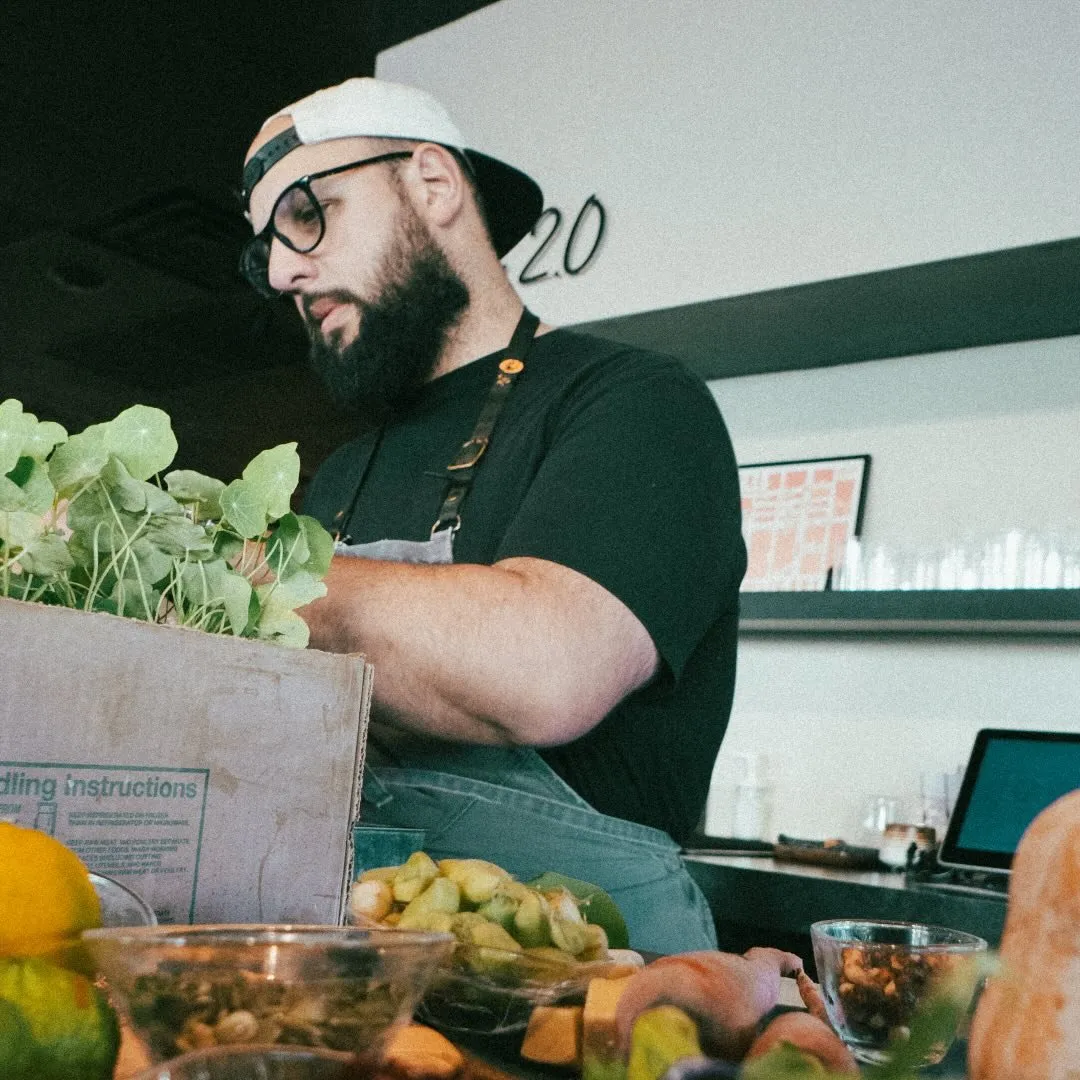
What is the simplest roadmap for a restaurant interested in being noticed by the Michelin Guide?
Pedro Mederos: You know, there's a lot of mysticism behind the Michelin guide and how they evaluate restaurants, how they hear about restaurants. The best advice I can give anyone, any cook, any restaurateur, any chef, anything, is not to worry about the awards

Be excellent for your team, for your guests, for your diners. And the recognition will come. Don't go star hunting. Just be the best at what you're doing.
If a young cook wants to work in a Michelin-quality kitchen just like yours, what would be the thing they have to do on day one?
Pedro Mederos: It's all attitude, right? When we hire, we obviously look at resumes, past experience, do stages, and allow people to trial. For us, it's about skills that can be taught, attitude can't. So knowing that you're always gonna be going into a kitchen, you may not 100% understand, even if you have past experience with the cuisine.
You have to be open to learning, making mistakes, and knowing that you're going into a kitchen that wants to teach you.
And that's the biggest thing. It's just come in ready to learn before you come in ready to work, if that makes sense.
What do you think is the part of cooking that young chefs these days underestimate or don't value much?
Pedro Mederos: When I was younger, I mean not that young, I suppose, the Noma Guide for Fermentation came out, and I started to feel like the chefs that I worked for when I was definitely younger in the industry, and it's, you know, everyone wants to jump right to the end, right?
Basics are the most important thing. If you can't make a stock, you can't make a sauce. And if you can't make a sauce, you sure can't make a garum, right? Get the basics down, learn. Ask your chef for demos, ask questions. Anyone who's a good mentor and is running a great kitchen wants their team to be as informed as possible, and they wanna teach, right? At the end of the day, the difference between a cook and a chef is that a chef teaches, right?
A cook just executes, and sometimes you have great cooks that teach, but those are the ones that are on their way to becoming a chef.
Let's say a young chef is trying to move too fast. What could be the biggest mistake they might make?
Pedro Mederos: I think Jose Andres said this: You want to go fast, go alone. If you want to go far, go together. And sometimes when cooks get ahead of themselves, and they start moving a little too quickly, and they start, you know, maybe attaining too much knowledge, they're not putting in the reps. They're not training themselves to cook or prep from an instinctual level.
You know, something that we emphasize here all the time, it's like, if you smell something burning, it's too late. You should be able to hear it burning before you smell it.
Because then you have the opportunity to catch it. We practice a lot of mindfulness in our kitchen and in our entire restaurant, like, it's okay to slow down, right? Because slow is smooth and smooth is fast.
And what's the one thing that makes you hire someone immediately?
Pedro Mederos: Attitude, 100 % attitude. I would rather start from scratch with someone who has never worked in a kitchen but has a great attitude and work ethic, and build them into what we would want for our restaurant. And every restaurant's different, but the way that we do things is just, I don't wanna say radically different.
I think we're one of the outliers in the restaurant industry. Like we do family meal every day. The team cooks for the team. The team has to sit together for a family meal. And it's a half hour of our day where we have a moment to enjoy each other's company. And that's really when our service begins, right? Like, we start taking care of each other. But if someone were to walk in here right now looking to work in the kitchen and they had little to no skills, little to no experience, but the right attitude.
What gets someone fired from such an environment, from Kojin 2.0?
Pedro Mederos: Honestly, we haven't had too many instances where we have to fire anyone. But I think what it comes to is just there's a certain level of integrity and respect in what we do. The ingredients and food are obviously important, and you know. We have so many sustainable practices. Just carelessness, lack of intentionality, and being wasteful.
Are you having any staffing issues in Miami?
Pedro Mederos: There is a shortage of labor, but I feel like it's not just a Miami issue. I think it's an overall issue. I think there are plenty of people to work with. How many of them want to come in and work in a way that is different from our restaurant, versus another restaurant, is really the battle that I think a lot of restaurants are facing. There are plenty of people with experience. That means they may have bad habits for the space that they're going into, and breaking those bad habits is sometimes just not cost-effective or worth the investment. So that's kind of, think we have a certain level of talent dysmorphia in the workforce.
Check Our Career Growth Tools


What are some of the red flags you look for in a potential candidate?
Pedro Mederos: Honestly, in the interview, we have a prep list for interviews, which is interesting on our end. If there's a clear lack of research into the restaurant, the team, and what we do, that is one of our red flags. I can't stress it enough. To get into some of the best kitchens in the world, you have to know what they're doing. You have to know the cuisine, you have to know some of their dishes, you know, come in with questions, right?
And I don't expect someone to come in here and know everything about Kojin, because if they did, they would work here. But when people just come here, and they're like, I just need a job. It's like, great. Everybody needs a job. But why, why should you work here other than, you know, needing a job and getting paid? It's more about what we are here to do and the restaurant's goal.
What is one unpopular truth about fine dining kitchens?
Pedro Mederos: You know, that's a tough one. I don't know. I mean, I think everyone, when we look at a lot of these fine dining restaurants, know, one, two, and three Michelin star restaurants, and even the restaurants with no award, but that just executed a level that is kind of incomprehensible, I think what people in the industry and outside of the industry forget is if all you're worried about is service, it's never going to be successful, right?
90% of our hard work happens when no one is in the building, just the team, and all we're doing is prepping, right? Prep, mise en place, that is the key to success. You're always gonna be racing a clock. There are always gonna be surprises. Your goal is to do everything you can to set yourself up for success. And once service starts, that's when it gets easy. That's where we get to have fun and enjoy what we do.
Check out more interviews like this brought to you by OysterLink to learn about the industry. You can get them straight to your email by creating an OysterLink account and joining our newsletter.

Loading comments...